
News
SVR got me moving, now I’m helping Veterans do the same
Content warning: This article contains themes of suicide which some readers may find distressing
A former RAF serviceman who bounced back from the most challenging period of his life with the support of SVR, is now helping fellow veterans move into their own homes.
Driver Paul Carnegie picked up the nickname ‘Carnage’ during basic training in his military days, and through his Blairgowrie-based removal firm Carnage Carriers is giving something back to the veterans’ community through a ‘pay what you can’ initiative.
Life has not been an easy road for dad-of-two Paul, 42, who found himself emotionally exhausted and homeless in 2024. In urgent need of help, he was guided by friends and family to Scottish Veterans Residences site at Rosendael in Dundee. It signalled the start of a positive journey onwards.
Paul grew up in Forfar and Arbroath and was drawn to a career in the Armed Forces, joining the RAF in 2005 and serving for six years, mainly based at Lossiemouth.
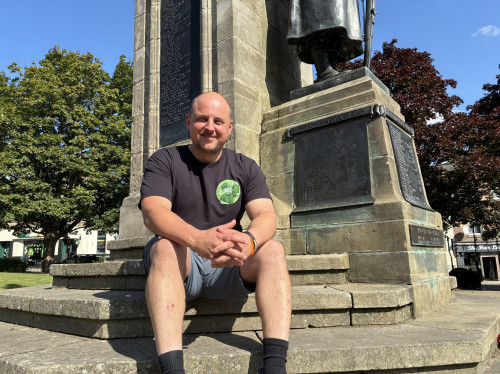
Marriage and the arrival of a baby daughter coincided with a posting to the Falklands, and when another potentially lengthy overseas assignment beckoned, Paul made the difficult decision to leave the Forces and spend more time with his family. “I loved my time in the RAF. When I left I immediately regretted it. It felt like my identity had gone,” he says. “Not long after I left, we broke up.”
Paul found it difficult to adapt to civilian life. Although he was a skilled driver, he initially did not have the required licenses to find work. Eventually, he was able to secure employment as a bus driver, and he spent more than two years on local routes, before the opportunity arose to join an Incident Response team – a tough role which involved dealing with major incidents, emergencies and fatalities on the rail network.
“You didn’t really know if you are able to do the job until you are there,” he says. “Maybe because of my military background I was able to push past it, but I do think it comes at a cost. There were some difficult, upsetting days and you might think you are managing it, but you are seeing a lot of traumatic stuff. However, being part of that team made me feel important again – it’s a job not everyone can do, and I was proud of it.”
When the rail contract ended, Paul found himself mainly office based, and in search for more freedom he went back to driving – this time HGVs.
In his personal life, however, Paul was starting to struggle.
He had got engaged and looking forward to a future with his new partner, but when the couple broke up in 2023, it led to a spiral of events for Paul.
“I thought I was managing, but then one day I was driving a truck around and felt a bit dazed, I just didn’t feel right,” he recalls. “I phoned my boss and said it wasn’t safe for me to be driving. There were consequences for that, but I needed to be honest. A month or two later, after I had dropped my son off, people were trying to get hold of me all day. I don’t really remember it, but I had been sitting in a supermarket car park for hours. I don’t know what I was doing there, and my head had completely gone. I had thoughts of taking my own life, but the thought of my kids thankfully kept from doing that. In a short space of time, I had gone from a position where I couldn’t be happier, and then my life just imploded and I felt I couldn’t do anything about it.”
Because he had sold his house, Paul was without a home and had been sofa-surfing and sleeping in his car. Recognising that he was in need of help, his mum and friends rallied around and looked around - discovering Scottish Veterans Residences. Paul first arrived at the charity’s Rosendael residence in Broughty Ferry in March 2024.

“It is all a bit of a blur,” he admits. “I do remember how kind and welcoming everyone was towards me, and being shown up to my room. I felt a mixture of emotions. I felt a sense of relief, I felt rescued, but I felt numb and a bit pathetic too – I was being hard on myself.
“I can’t remember much about those first few weeks. I slept a lot, rested a lot. I am quite a talkative person, but I didn’t speak to many people at first. Then I started to waken up to the reality of my situation and felt some clarity and peace. I benefited from structure, meals and rest. I was then able to talk to the staff, open up more. I still felt a bit raw, but I was at least able to think clearly again. They were very patient with me, pushed me in the right way at the right pace. and they treated me with a lot of kindness and respect. I felt like I was coming back to myself, and I started to feel optimistic again.
“A couple of months in, the penny dropped for me personally. I saw SVR as an aid to moving on, not a final destination. I would sit with staff and have good chats about what was next for me. When you are at the bottom of the pit, you feel like your life is in tatters and it can’t get any worse, then when it starts to get better, a bit of fearlessness comes in, because the only way is up.
“I accessed counselling and that helped me massively, that ability to process things. I started to feel stronger. Even when I felt brighter, I recognized the importance of continuing to talk things through, to check-in, to engage with the support available. The staff at Rosendael were just great. The other residents too.
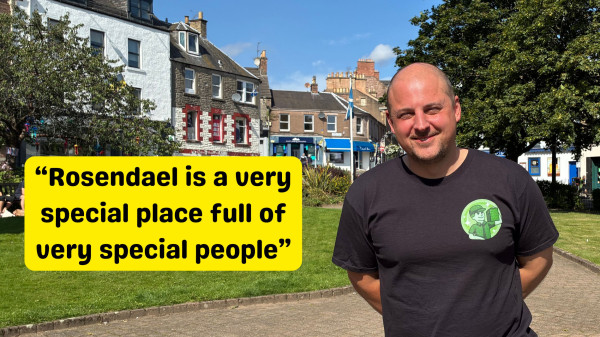
“I found having a game of darts, snooker, going to the gym, or just chatting with the lads was a big help. There was nobody in there who did not want me to succeed. Everyone is rooting for you whether it is staff or residents. That’s powerful. It’s a very special place full of very special people.
“If I was giving advice to anyone, then I would say that while SVR is a coping tool and a sanctuary, a great place with some amazing people that can help you, you have to want to get back out. And I did. After six months, they helped me get a flat. Living independently again was a bit daunting, but exciting as well.”
After a spell back driving lorries ended, Paul had the brainwave to set up his own business, and he has gone from strength to strength, with the support of his brother Adrian and some solid friends in the community. “I do removals, house, shed garage clearances, skip runs, I’m SEPA registered, and I also do a thing for Veterans where they pay what they can. Anything I can do to help out, I will. I have kept up my connection with Rosendael. I have been in for breakfast, or to bring in biscuits or some money I have raised for them. It’s really important to me to show my support, because they helped me when I had nothing. There would not be a Carnage Carriers if it had not been for them.”
Paul is an advocate for mental health and peer support. He attends a men’s mental health football session once a week at Station Park in Forfar; and locally supports Andy’s Mans Club; and the charity Mantalk, who he recently joined on a trip to the summit of Ben Nevis. “The camaraderie at our football is amazing and probably the closest thing I have felt to my time at Lossie in the RAF. Just as important as the actual football is the chat in the car park afterwards, looking out for each other, talking to each other. Men are better now at looking out for each other than they were 20 years ago.
“There’s an analogy I use to reflect on what happened to me when I was in crisis. It is like being like a footballer who has just had an injury – you’re not going to be fully fit and back on the pitch the next day. It’s about being kind to yourself, making sure you get physical and mental rest, and then getting back into training, taking it easy and getting match-fit again. I feel better equipped now, and a lot of that is down to SVR and Rosendael.”

- You can email Carnagecarriers@proton.me, call 07447 751449, or find them on Facebook
- If you are in need of support from SVR, please call us 24/7 on 0300 131 6755 or fill in our ONLINE ACCOMMODATION ENQUIRY FORM
 RSS
